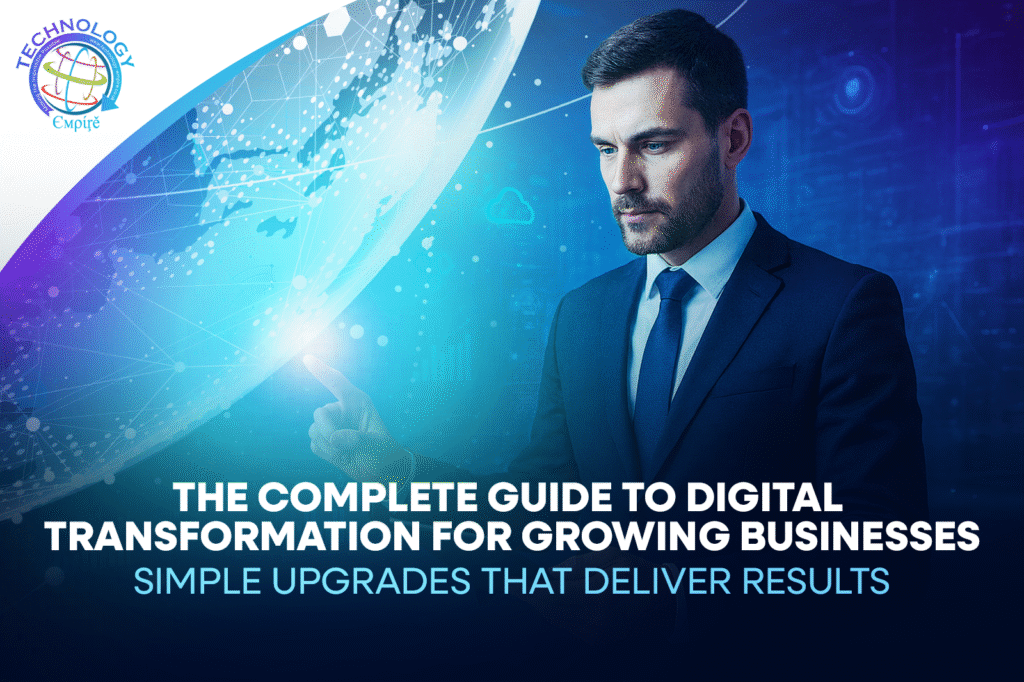
One of the most significant growth drivers for contemporary businesses is digital transformation, but it doesn’t have to entail completely rebuilding your company or spending a lot of money on complicated, pricey technology. For the majority of small and medium-sized enterprises, digital transformation simply entails implementing more intelligent tools, eliminating antiquated procedures, and leveraging technology to enhance customer satisfaction, productivity, and scalability.
This guide examines the true meaning of digital transformation for a developing company, the indicators that your company is prepared for an upgrade, and the easy, high-impact adjustments you can make to get significant outcomes.
What Digital Transformation Really Means
Although digital transformation is frequently associated with large corporations, it is actually most beneficial for expanding SMEs. Digital transformation is fundamentally about leveraging technology to enhance your company’s operations, customer service, and decision-making processes.
It has nothing to do with making your business a tech behemoth or substituting machines for people. Rather, it concentrates on:
• Streamlining manual processes
• Reducing repetitive work
• Improving workflows and communication
• Delivering better customer experiences
• Making more informed decisions based on actual data;
• Strengthening security and business continuity.
Digital transformation is an ongoing process rather than a one-time event. Businesses must adjust to stay competitive as tools change and customer expectations shift.
Signs Your Business Needs an Upgrade
Many businesses continue to operate with outdated systems until problems become too big to ignore. If you notice any of the signs below, your organisation may be overdue for a digital upgrade.
1. Reliance on manual processes
Digital tools can automate a large portion of the workload if your team spends hours on administrative tasks, data entry, paperwork, or manual updates.
2. Slow decision-making
Businesses frequently rely on guesswork in the absence of centralized data. Real-time insights from digital systems enable well-informed decision-making.
3. Difficulty managing growth
Old systems can put a strain on your operations as you take on more clients, orders, or staff. Digital platforms grow with your company.
4. Poor customer experience
Outdated procedures, inconsistent communication, or lengthy response times can irritate clients and lower loyalty.
5. Fragmented or outdated systems
Productivity declines when teams use disparate, non-integrating tools or, worse, stick with spreadsheets.
6. Cybersecurity concerns
Attacks are more likely to target older systems. Strong protection is essential for businesses expanding their online presence.
7. Increased competition
Competitors are enhancing their digital capabilities in numerous industries. Your competitive advantage is diminished if you fall behind.
If you recognize a few of these points, digital transformation can greatly enhance your company’s operations.
Digital Tools That Deliver Fast Results
Not all upgrades have to be significant or costly. In actuality, some of the best digital tools provide quick wins and instant efficiency gains.
1. Modern productivity and collaboration platforms
Microsoft 365, Google Workspace, and Slack are examples of tools that facilitate communication, lessen email clutter, and maintain team connections.
2. Customer Relationship Management (CRM) systems
You can track customer interactions, manage leads, and automate follow-up tasks with the aid of a CRM. It guarantees that no opportunity is lost.
3. Accounting and invoicing software
Xero, QuickBooks, and FreshBooks are examples of platforms that reduce manual financial work, automate invoicing, and enhance cash-flow management.
4. Digital point-of-sale (POS) systems
Newer point-of-sale (POS) systems provide a comprehensive overview for retail and hospitality businesses by integrating stock management, reporting, and sales insights.
5. Marketing automation tools
By automating social media scheduling, email campaigns, and customer segmentation, you can keep up regular communication without having to do any manual labor.
6. Project management tools
Teams can better organize tasks, increase accountability, and complete projects more quickly with the aid of platforms like Monday.com, Asana, and Trello.
7. Cybersecurity and monitoring software
Tools for secure backups, password management, and threat detection help safeguard your company and ensure continuity.
These solutions all provide quantifiable gains in a matter of weeks rather than months.
Automation & Process Streamlining
One of the most potent facilitators of digital transformation is automation. It enables expanding companies to accomplish more with less, cut down on mistakes, and free up employee time for more important tasks.
What automation can achieve for SMEs
- Reduce labor costs]
- Speed up internal processes
- Eliminate repetitive manual tasks\
- Improve accuracy and consistency
- Boost team productivity.
The Step-by-Step Guide to Digital Transformation for Evolvong Businesses: Simple Upgrades That Deliver Results
One of the most significant growth drivers for contemporary businesses is digital transformation, but it doesn’t have to entail completely rebuilding your company or spending a lot of money on complicated, pricey technology. For the majority of small and medium-sized enterprises, digital transformation simply entails implementing more intelligent tools, eliminating antiquated procedures, and leveraging technology to enhance customer satisfaction, productivity, and scalability.
This guide examines the true meaning of digital transformation for a developing company, the indicators that your company is prepared for an upgrade, and the easy, high-impact adjustments you can make to get significant outcomes.
What Digital Transformation Really Means
Although digital transformation is frequently associated with large corporations, it is actually most beneficial for expanding SMEs. Digital transformation is fundamentally about leveraging technology to enhance your company’s operations, customer service, and decision-making processes.
It has nothing to do with making your business a tech behemoth or substituting machines for people. Rather, it concentrates on:
• Streamlining manual processes
• Reducing repetitive work
• Improving workflows and communication
• Delivering better customer experiences
• Making more informed decisions based on actual data;
• Strengthening security and business continuity.
Digital transformation is an ongoing process rather than a one-time event. Businesses must adjust to stay competitive as tools change and customer expectations shift.
Signs Your Business Needs an Upgrade
Many businesses continue to operate with outdated systems until problems become too big to ignore. If you notice any of the signs below, your organisation may be overdue for a digital upgrade.
1. Reliance on manual processes
Digital tools can automate a large portion of the workload if your team spends hours on administrative tasks, data entry, paperwork, or manual updates.
2. Slow decision-making
Businesses frequently rely on guesswork in the absence of centralized data. Real-time insights from digital systems enable well-informed decision-making.
3. Difficulty managing growth
Old systems can put a strain on your operations as you take on more clients, orders, or staff. Digital platforms grow with your company.
4. Poor customer experience
Outdated procedures, inconsistent communication, or lengthy response times can irritate clients and lower loyalty.
5. Fragmented or outdated systems
Productivity declines when teams use disparate, non-integrating tools or, worse, stick with spreadsheets.
6. Cybersecurity concerns
Attacks are more likely to target older systems. Strong protection is essential for businesses expanding their online presence.
7. Increased competition
Competitors are enhancing their digital capabilities in numerous industries. Your competitive advantage is diminished if you fall behind.
If you recognize a few of these points, digital transformation can greatly enhance your company’s operations.
Digital Tools That Deliver Fast Results
Not all upgrades have to be significant or costly. In actuality, some of the best digital tools provide quick wins and instant efficiency gains.
1. Modern productivity and collaboration platforms
Microsoft 365, Google Workspace, and Slack are examples of tools that facilitate communication, lessen email clutter, and maintain team connections.
2. Customer Relationship Management (CRM) systems
You can track customer interactions, manage leads, and automate follow-up tasks with the aid of a CRM. It guarantees that no opportunity is lost.
3. Accounting and invoicing software
Xero, QuickBooks, and FreshBooks are examples of platforms that reduce manual financial work, automate invoicing, and enhance cash-flow management.
4. Digital point-of-sale (POS) systems
Newer point-of-sale (POS) systems provide a comprehensive overview for retail and hospitality businesses by integrating stock management, reporting, and sales insights.
5. Marketing automation tools
By automating social media scheduling, email campaigns, and customer segmentation, you can keep up regular communication without having to do any manual labor.
6. Project management tools
Teams can better organize tasks, increase accountability, and complete projects more quickly with the aid of platforms like Monday.com, Asana, and Trello.
7. Cybersecurity and monitoring software
Tools for secure backups, password management, and threat detection help safeguard your company and ensure continuity.
These solutions all provide quantifiable gains in a matter of weeks rather than months.
Automation & Process Streamlining
One of the most potent facilitators of digital transformation is automation. It enables expanding companies to accomplish more with less, cut down on mistakes, and free up employee time for more important tasks.
What automation can achieve for SMEs
- Reduce labor costs]
- Speed up internal processes
- Eliminate repetitive manual tasks\
- Improve accuracy and consistency
- Boost team productivity.
Examples of practical automation
- Automated invoicing
- Email responses based on consumer behavior
- Stock-level updates and inventory alerts
- Scheduling and booking confirmations
- Data synchronization across various systems
- Chatbots for frequently asked customer questions
Automation is not about replacing people — it’s about allowing your team to focus on meaningful, skilled tasks that drive growth.
Cloud Adoption for SMEs
The core of digital transformation is cloud technology. Businesses can operate more securely, flexibly, and effectively by moving their systems to the cloud.
Key benefits of cloud migration
1. Remote access and collaboration
Faster response times and flexible working are made possible by employees’ ability to access files, apps, and tools from any location.
2. Reduced hardware costs
Expensive servers and on-site infrastructure are no longer necessary with cloud systems.
3. Better security
Small businesses find it difficult to match the sophisticated security, encryption, and redundancy offered by cloud providers.
4. Scalability
Cloud systems grow with your company without requiring expensive upgrades.
5. Improved business continuity
Cloud backups guarantee that your company continues to operate in the event of a technical malfunction.
Common cloud solutions for SMEs
- Cloud storage (OneDrive, Google Drive, Dropbox)
- Cloud-based software (CRM, POS, HR systems)
- Virtual servers and hosting
- Cloud backup and recovery tools
One of the easiest ways to modernize your company without making a significant financial commitment is to migrate to the cloud.
Improving Customer Experience Through Technology
Technology is essential to meeting the ever-higher expectations of customers. Digital tools can be used by expanding companies to improve all phases of the customer journey.
1. Faster, more personalised communication
CRM-driven workflows, automated messages, and live chat tools guarantee that clients receive pertinent updates on time.
2. Easier purchasing and booking
The customer experience is made simpler by contemporary payment methods, online reservation systems, and digital receipts.
3. Greater transparency
Trust and loyalty are increased through order tracking, delivery updates, and easily accessible customer portals.
4. More personalised service
Businesses can better understand consumer behavior and customize their offerings with the aid of data analytics.
5. Reputation management
Social media platforms and online reviews support businesses in upholding their credibility and strong public presence.
Technology should improve the customer journey rather than make it more difficult, giving your company an advantage over rivals who continue to use antiquated methods.
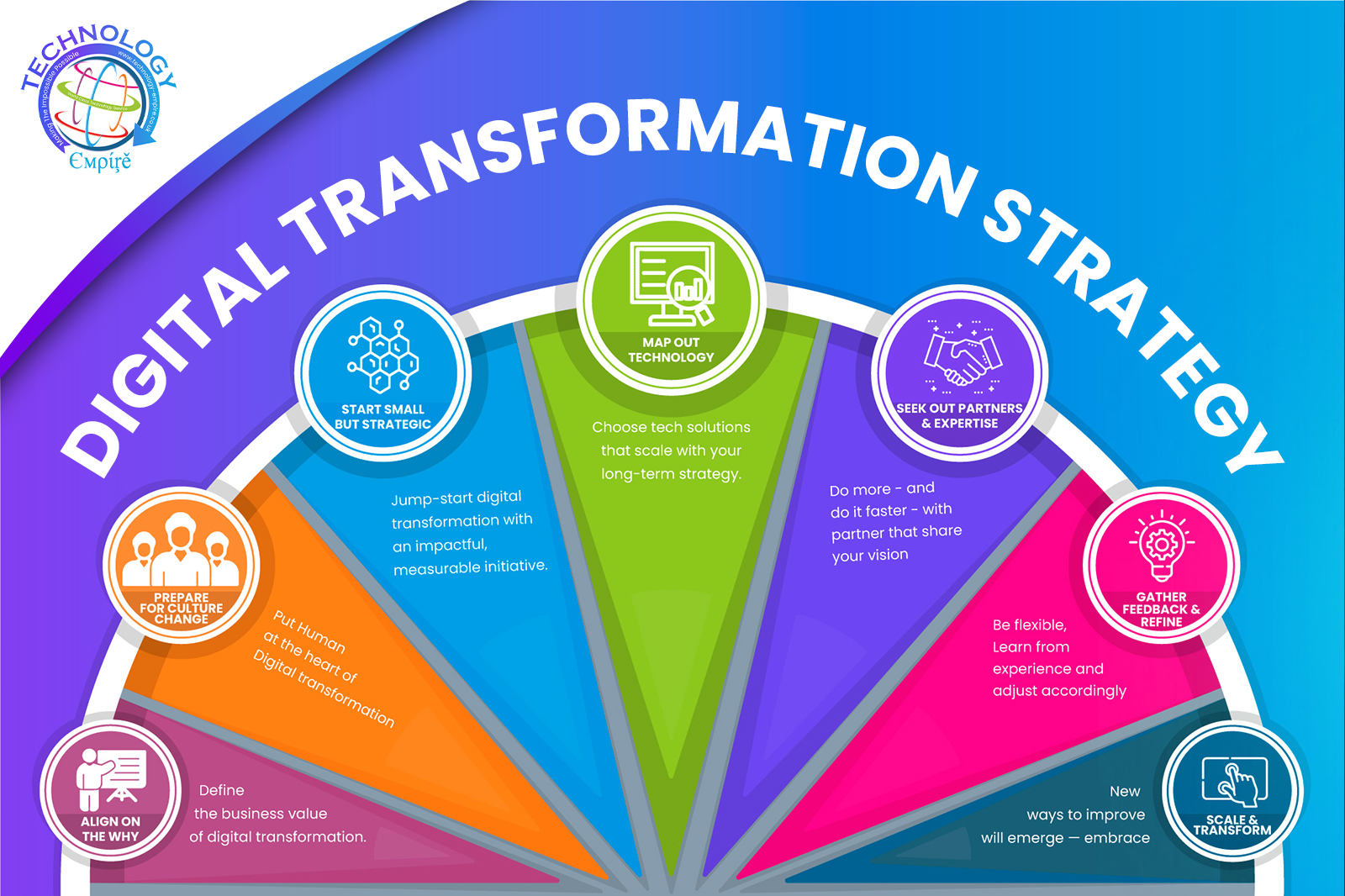
Planning Your Transformation Strategy
Digital transformation is most effective when it is directed by a well-defined plan. Companies that properly plan their upgrades experience better outcomes, cheaper costs, and more seamless implementation.
Step 1: Assess your current systems
Determine digital gaps, inefficiencies, and bottlenecks.
Step 2: Define your goals
Do you want to boost security, enhance customer service, save time, or foster expansion?
Step 3: Prioritise high-impact upgrades
Start with changes that offer immediate value, such as automation, cloud migration or modern communication tools.
Step 4: Create a realistic timeline
Divide the procedure into doable stages; there’s no need to completely revamp it all at once.
Step 5: Train your team
People, not just technology, are the key to successful transformation.
Step 6: Monitor and optimise
As your company expands, keep improving your processes because digital transformation is a continuous process.
Final Thoughts
Neither a large budget nor sophisticated technical knowledge are necessary for digital transformation. Growing companies can significantly enhance their operations, customer experience, and long-term performance with the correct tools, well-defined priorities, and a strategic approach.
Within months, even minor improvements like automation, cloud computing, or contemporary point-of-sale systems can yield significant outcomes.
Digital transformation is now a must for companies hoping to expand, simplify, and maintain their competitiveness. It is the cornerstone of success in the future. And our team at Technology Empire is here to simply your digital transformation.
- Automated invoicing
- Email responses based on consumer behavior
- Stock-level updates and inventory alerts
- Scheduling and booking confirmations
- Data synchronization across various systems
- Chatbots for frequently asked customer questions
Automation is not about replacing people — it’s about allowing your team to focus on meaningful, skilled tasks that drive growth.
Cloud Adoption for SMEs
The core of digital transformation is cloud technology. Businesses can operate more securely, flexibly, and effectively by moving their systems to the cloud.
Key benefits of cloud migration
1. Remote access and collaboration
Faster response times and flexible working are made possible by employees’ ability to access files, apps, and tools from any location.
2. Reduced hardware costs
Expensive servers and on-site infrastructure are no longer necessary with cloud systems.
3. Better security
Small businesses find it difficult to match the sophisticated security, encryption, and redundancy offered by cloud providers.
4. Scalability
Cloud systems grow with your company without requiring expensive upgrades.
5. Improved business continuity
Cloud backups guarantee that your company continues to operate in the event of a technical malfunction.
Common cloud solutions for SMEs
- Cloud storage (OneDrive, Google Drive, Dropbox)
- Cloud-based software (CRM, POS, HR systems)
- Virtual servers and hosting
- Cloud backup and recovery tools
One of the easiest ways to modernize your company without making a significant financial commitment is to migrate to the cloud.
Improving Customer Experience Through Technology
Technology is essential to meeting the ever-higher expectations of customers. Digital tools can be used by expanding companies to improve all phases of the customer journey.
1. Faster, more personalised communication
CRM-driven workflows, automated messages, and live chat tools guarantee that clients receive pertinent updates on time.
2. Easier purchasing and booking
The customer experience is made simpler by contemporary payment methods, online reservation systems, and digital receipts.
3. Greater transparency
Trust and loyalty are increased through order tracking, delivery updates, and easily accessible customer portals.
4. More personalised service
Businesses can better understand consumer behavior and customize their offerings with the aid of data analytics.
5. Reputation management
Social media platforms and online reviews support businesses in upholding their credibility and strong public presence.
Technology should improve the customer journey rather than make it more difficult, giving your company an advantage over rivals who continue to use antiquated methods.
Planning Your Transformation Strategy
Digital transformation is most effective when it is directed by a well-defined plan. Companies that properly plan their upgrades experience better outcomes, cheaper costs, and more seamless implementation.
Step 1: Assess your current systems
Determine digital gaps, inefficiencies, and bottlenecks.
Step 2: Define your goals
Do you want to boost security, enhance customer service, save time, or foster expansion?
Step 3: Prioritise high-impact upgrades
Start with changes that offer immediate value, such as automation, cloud migration or modern communication tools.
Step 4: Create a realistic timeline
Divide the procedure into doable stages; there’s no need to completely revamp it all at once.
Step 5: Train your team
People, not just technology, are the key to successful transformation.
Step 6: Monitor and optimise
As your company expands, keep improving your processes because digital transformation is a continuous process.
Final Thoughts
Neither a large budget nor sophisticated technical knowledge are necessary for digital transformation. Growing companies can significantly enhance their operations, customer experience, and long-term performance with the correct tools, well-defined priorities, and a strategic approach.
Within months, even minor improvements like automation, cloud computing, or contemporary point-of-sale systems can yield significant outcomes.
Digital transformation is now a must for companies hoping to expand, simplify, and maintain their competitiveness. It is the cornerstone of success in the future. And our team at Technology Empire is here to simply your digital transformation.